
36Kr learned that the unmanned convenience store "Convenience Home" has received millions of yuan in angel round investment from Lianchuang Yongxuan Feng Tao.
Unmanned convenience stores are in the spotlight at this time, with many players including Bingo Box, F5 Future Store, DeepBlue Technology, and Easy Go, and giants such as Amazon, Lawson, Alibaba, and Walmart also testing the waters.
"Convenience Home" was founded in March 2017 and is located in Shanghai. Convenient Home has two products: micro unmanned convenience stores and medium-sized unmanned convenience stores. Compared with other players, Convenient Home’s difference lies in its flexibility.
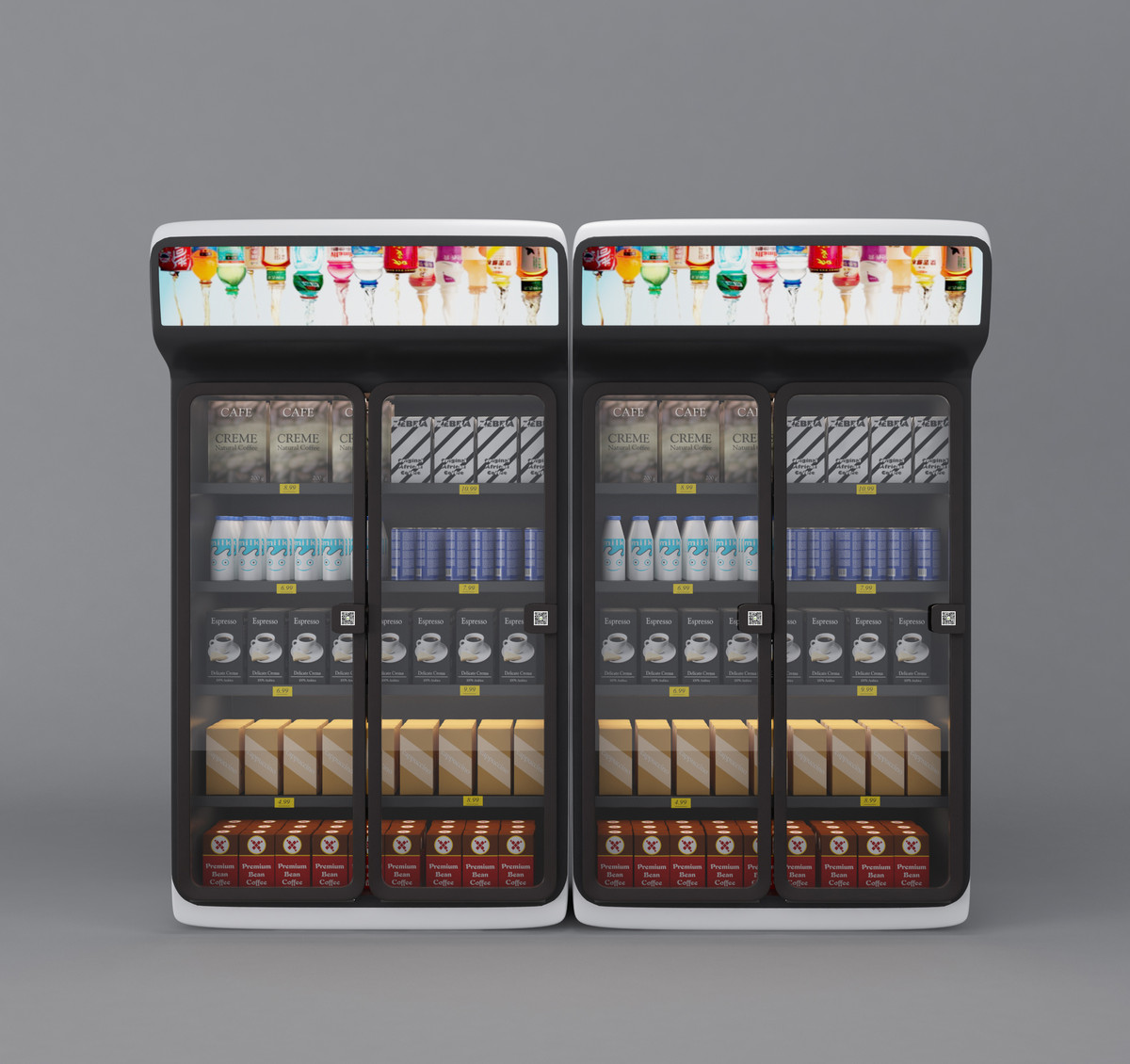
Convenience Home’s “micro-unmanned convenience store” has a minimum unit area of less than 1 square meter (0.68 square meters) and is more flexible in locations, including subway stations, office buildings, universities, etc. The cost of a minimum unit convenience store is about 13,000 yuan (may be lower after mass production). The smallest unit of unmanned convenience store can be "joined together" to create a convenience store with a larger unit area according to the distribution of human flow. If there are less than 100 people, you can put one; if there are about 100 people, you can put two; if there are more than 500 people, you can put four. Convenient Home's "medium-sized unmanned convenience store" is made up of six micro-convenience stores. At the same time, tables and chairs are added in the space to provide consumers with a rest area. It can be placed in relatively open communities, parks, etc.
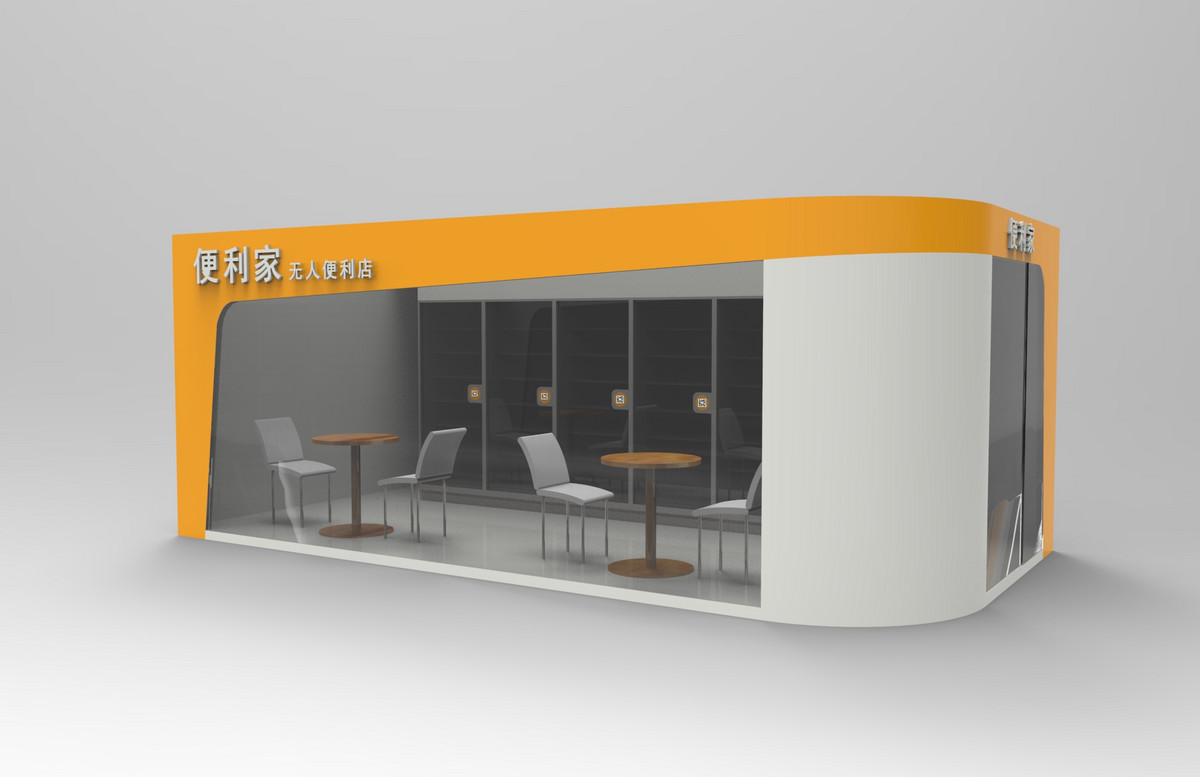
Technically, Convenience Home has installed RFID on each shelf and sealed and shielded every corner and crevice to make the recognition rate higher. The process is very simple. Use Alipay to scan the QR code to open the door, take it and leave, and Alipay will automatically deduct the payment (WeChat is currently negotiating). In the future, Convenience Home hopes to perform palmprint recognition on door handles, so that when consumers perform the action of "opening the door," they can be identified.
Conceptually, Convenient Home is actually closer to a vending machine. Founder Fan Shaowei believes that Convenient Home is an improvement on traditional vending machines. On the one hand, the business categories of traditional vending machines are mostly beverages and fixed-packaged snacks, while convenience stores will mainly focus on "fresh food" that is in line with the health trend; on the other hand, the shipping process of traditional vending machines is to pay first and then ship. The display method of the pipes makes space utilization low. If it is a fresh food product, it may be deformed in the process of falling. Convenient Home stores can be stacked and densely arranged in order to get the goods first and then charge the money, making space utilization more efficient. "With the same area, our delivery rate is twice that of traditional vending machines."
Convenience Home’s product selection logic is to select different products according to different venues. For example, in office buildings to meet the brunch needs of white-collar workers, it provides lunch boxes, sandwiches, salads, etc.; in colleges and universities, it provides snacks, braised food, bread, etc. Compared with FamilyMart’s average unit price per customer (14 yuan), Convenient Home sets the average unit price at around 10 yuan. In addition, through the mini program, consumers can give feedback on the food they want to eat, and the data can be used to guide category selection.
In addition to micro and medium-sized convenience stores, Convenient Home also has a third aspect of business - the transformation of traditional mom-and-pop stores. The characteristics of offline mom-and-pop stores are that they come in different sizes and areas. The unmanned convenience store renovation plan provided by Convenient Home includes: first, mom-and-pop stores share space resources and share sales; second, the franchise method provides a higher revenue ratio. On the one hand, small shop owners do not need to guard the store for more than ten hours a day. On the other hand, in addition to unmanned sales, they can also expand other businesses to gain more profits, such as milk tea, coffee, etc.
"Whether it is unmanned retail or manned retail, it is still a retail business in essence." Fan Shaowei said. Since it is a retail business, when it comes to the layout of outlets, we need to take a global perspective. "The biggest fear is a hammer in the east and a stick in the west."
Only the reasonable layout of points, lines and surfaces can reduce operating costs and logistics costs to the greatest extent. Two important factors need to be considered: the flow of people and the coordination of laying points. Convenience Home’s idea is to place a medium-sized unmanned convenience store in a densely populated area, and then arrange 10 micro-unmanned convenience stores within a 100-meter radius to form a “minimum replenishment unit”. One person can be responsible for the replenishment of 20 devices.
As for the cost of RFID tagging, Fan Shaowei is optimistic. The current tag cost is 0.5-0.6 yuan, but with the popularity of RFID in the retail market, the price of RFID tags will definitely decrease.
After this round of financing, Convenience Home will establish a trial operation site in Shanghai, medium + micro unmanned convenience stores, and is expected to open 20 outlets. Currently, Convenience Home is seeking Pre-A round financing to expand mass production and launch operations.
In terms of the team, CEO Fan Shaowei graduated from Harbin Institute of Technology and served as the Northern Region Manager of the Shangpai Software Channel Department. He is a serial entrepreneur. COO Wu Wei has a master's degree from Shanghai Jiao Tong University and has been a serial entrepreneur in the field of fast-moving consumer goods; CTO Peng Genggeng graduated from Shanghai University with a major in computer engineering and served as a senior engineer in the advertising platform department of Tencent's OMG business group.